
Audrey Westerberg
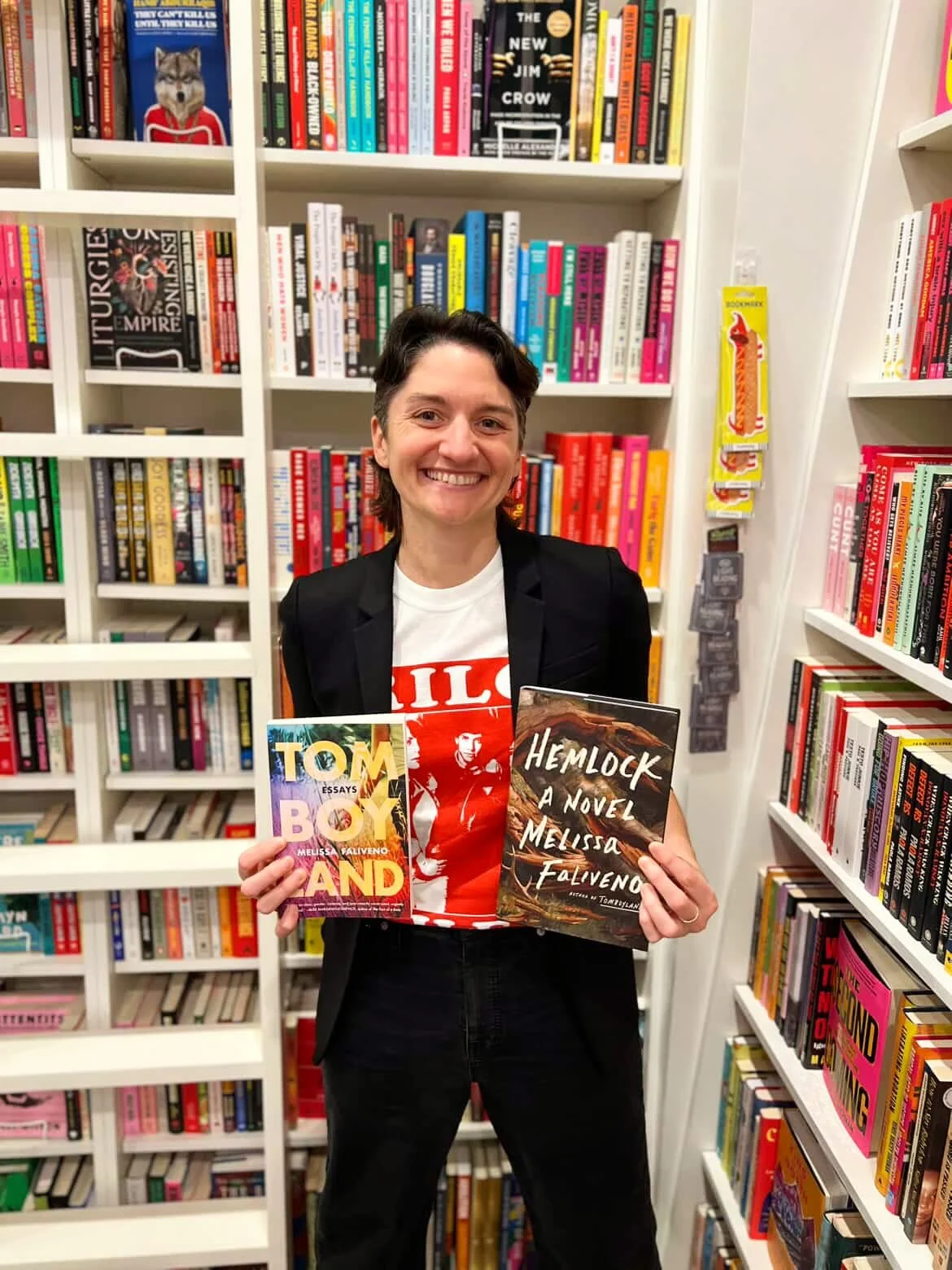
On Wednesday, February 18, at 6:15pm, essayist and novelist Melissa Faliveno will host a reading and discussion from her debut novel, Hemlock, at Eau Claire’s Dotters Books.
Hemlock is a queer and unmistakingly midwestern gothic novel, one centering on Sam— a tenuously sober Wisconsinite—who returns to her family’s abandoned Northwoods cabin in the town of Hemlock, a few years after her mother’s disappearance. As Sam settles back into her woodland home, her grasp on sobriety and reality begins to slip. And as her brief stay prolongs, an ominous change takes root within her body, and Sam is forced to confront long buried truths about her mother, and herself.

Midwest readers will find familiarity in Hemlock’s pages: from the billboards speckling long stretches of highway, to the dense forest pines, and in the crisp chill of morning. These simple details, seemingly plucked from hazy memories, are an homage to the Northwoods.
Faliveno knows the terrain because she grew up here. As a native Wisconsinite, she drew much of her novel from her own experiences as a queer person in rural Wisconsin. But the book explores other themes, too: carrying an inheritance of mental illness, negotiating identity with expectations, and the complicated knot of alcoholism within Midwest culture
“I think that there’s also a culture in Wisconsin and in the Midwest of silence and not talking about problems”
“I think that there's also a culture in Wisconsin and in the Midwest of silence and not talking about problems… And so I write—and in many ways like say things—that I can't say out loud, that I don't know how to say out loud. That I've never known how to say.”
Hemlock delves into the unsaid and nestles into the uncomfortable. It’s in these liminal spaces that Faliveno explores the idea of home and what can make one’s home turn on them—grappling with questions of belonging and safety within a queer body.
“It’s this interesting paradox in the Midwest, people who are queer… we stick out. There’s this dichotomy of both safety and threat; coming home versus being in a place that might try to harm you.”
Exploring these personal themes in her writing is what Faliveno found interesting and made finishing Hemlock possible.
“I wanted to write something that I hadn't seen much of,” Faliveno explained. “I'm always returning in my work to intersections of Midwestern landscapes and the body, gender, queerness, class.”
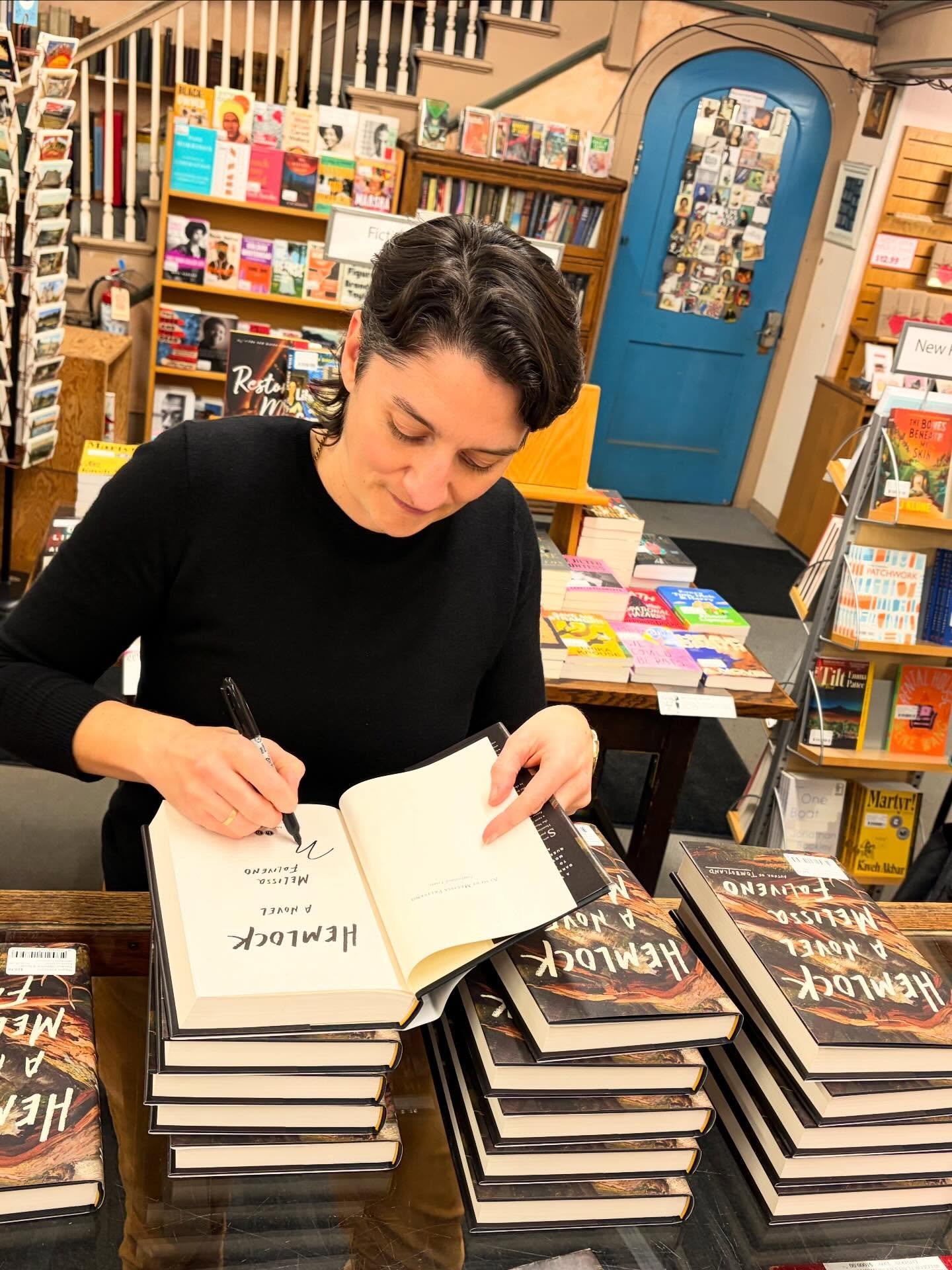
Though Faliveno noted, her writing progress is not linear. She wrote Hemlock on and off over several years, alternating between other writing projects and playing music. From conception to book release, Hemlock took six years to complete.
“I think that writing is a long game [and] publishing is a long game,” Faliveno remarked. “What separates people who want to be writers and people who become writers are [that writers] stick to it and are writing things that compel them.”
Music, she emphasized, helped inspire her during blocks. In particular, “I Wish I Was Sober” by Frightened Rabbit, played on repeat in her head as she wrote Hemlock, helping her get into the headspace of Sam.
“It helped me get into the embodied feeling of being inebriated and wanting to be better—wanting to get better,” Faliveno said.
The event at Dotters Books this Wednesday will be a chance for local writers and casual readers alike to hear a segment of Hemlock read aloud, and grab a signed copy.