
Audrey Westerberg
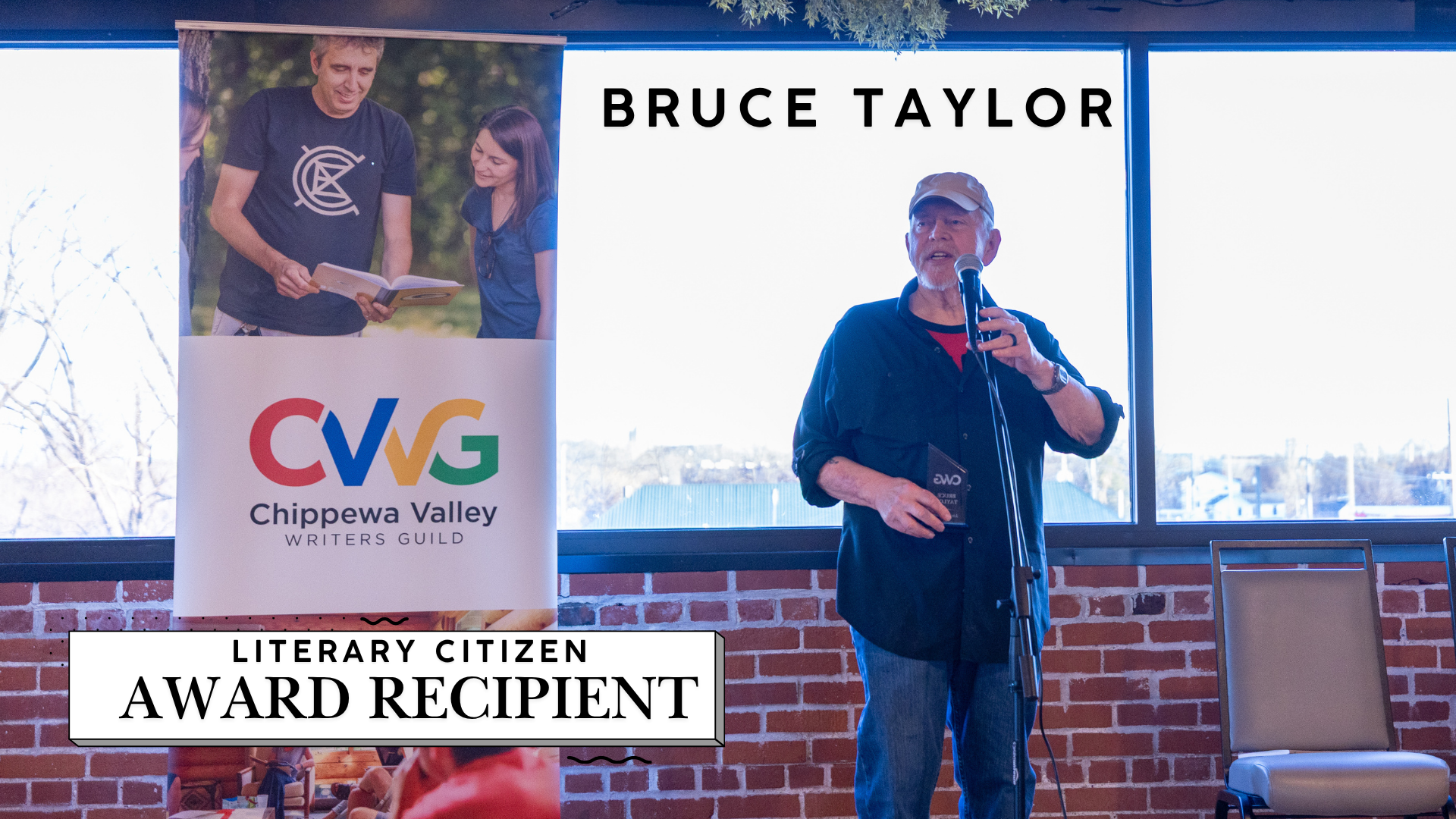
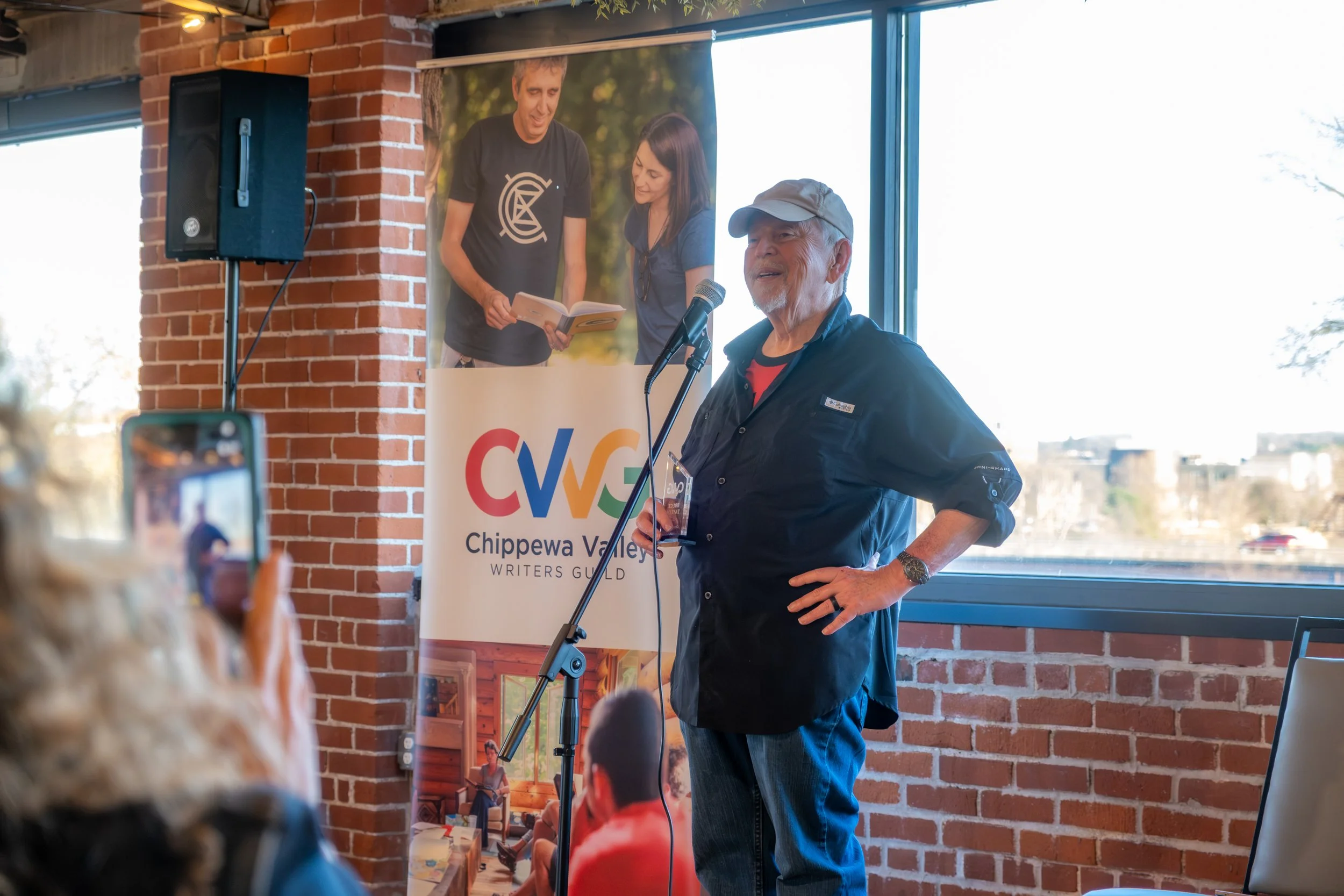
This month, the Chippewa Valley Writers Guild celebrated its ten-year anniversary at the Brewing Projekt. During this celebration, the Guild recognized Bruce Taylor as a foundational member of the Chippewa Valley writing community with the first-ever Literary Citizen Award.
“The Literary Citizen Award is a way to recognize the longstanding work of a writer committed to uplifting the writers all around them,” says Guild director B.J. Hollars. “Bruce fit the bill, and then some.”
Taylor, a professor emeritus at UW-Eau Claire, former poet laureate, and prolific poet, is a pillar of the Chippewa Valley writing scene. To commemorate the occasion, we asked him some questions about his time in the Chippewa Valley.
Audrey Westerberg: How did your relationship with writing and poetry begin?
Bruce Taylor: I was always a voracious reader. The first writing I remember doing was when I was about 7. A novel, I thought, but actually 27 pages about a nuclear apocalypse where I led my family and friends to safety in the wilds of New Hampshire. Obviously way ahead of my times.
AW: What were some of your experiences with other writing communities like before Eau Claire?
BT: I went to a small undergrad school, so very few people had to be everything: actors, activist, politicians, protesters and writers. I started a repertoire theater group, where we wrote all of our own material. Also an “underground” magazine, Liberal Lit – remember it was the 1960’s—that had the distinction of being taken off the shelves by the chief of police.
My grad school was at the time one of only 4 schools in the country offering an MFA. I chose it because it was the furthest away from my home in Boston. A small program, 10 poets, some very talented. One of the professors was Miller Williams, who became and remained my teacher, friend, mentor, and shining example.
AW: You earned your B.A in Massachusetts, and your M.A and M.F.A in Arkansas. How did you end up in Eau Claire?
BT: 1972 was a tough job market. I typed individually over 50 applications. I could not afford not to have job. Got three nibbles, one too close to home, two others: Stout and Eau Claire. I was too self-conscious at 240 lbs to wear a T-shirt that said ‘Stout’ so it was here. They told me not to unpack, since it was a one-year ‘gig.’
AW: What was the writing scene in Eau Claire like when you first got here?
BT: Don't think that there was one, per se, but a couple of faculty members, Dick Kirkwood and Peg Lauber, were published poets and they nurtured and inspired many students.
AW: How were you involved?
BT: I wrote and taught the first creative writing courses, had a hand in creating the creative writing and professional writing minor, and advised NOTA, which placed 2nd in its first year and 1st in its second in a national competition for undergraduate creative writing magazines.
AW: How did the writing scene evolve during your time as an English professor at UWEC?
BT: It grew exponentially: the once-a-month NOTA readings attracted more students and eventually faculty and community members. It spread to off campus. At one point, there were five separate open readings at five different locations every month. This included a ‘poetry slam,” offered by my former students, now local teachers, which were very successful and brought in a lot of younger kids. We began to hire more writers. Our graduates began to get jobs, publish and win awards and starting or joining other writing communities at other universities.
AW: What do you try to explore through your work?
BT: I don't know that I explore anything but I try to make good things full of utility and grace.
AW: Is there a theme in particular that you find yourself coming back to?
BT: Don't know about “themes.” It is challenging enough for me to try “to polish the ordinary until it becomes extraordinary and the extraordinary until it becomes transcendent.” I know how grandiose that sounds. I work with moving relations of sound and sense, of the concrete and the abstract, of vision and voice.
AW: How has your work, or style, changed over the years?
“The poet Nicanor Para said you should ‘try to improve on the blank page.’ I still try. ”
BT: The poet Nicanor Para said you should "try to improve on the blank page." I still try. AW:
AW: What are your current projects about?
BT: Again, I’m not comfortable with a word like "project." Let’s just say I am still writing, less often and more slowly but "still."
AW: And really anything else you’d like to address!
BT: I have already skipped over too much, forgotten too much, was wrong too often. No sense compounding all that or this.